PinSleuth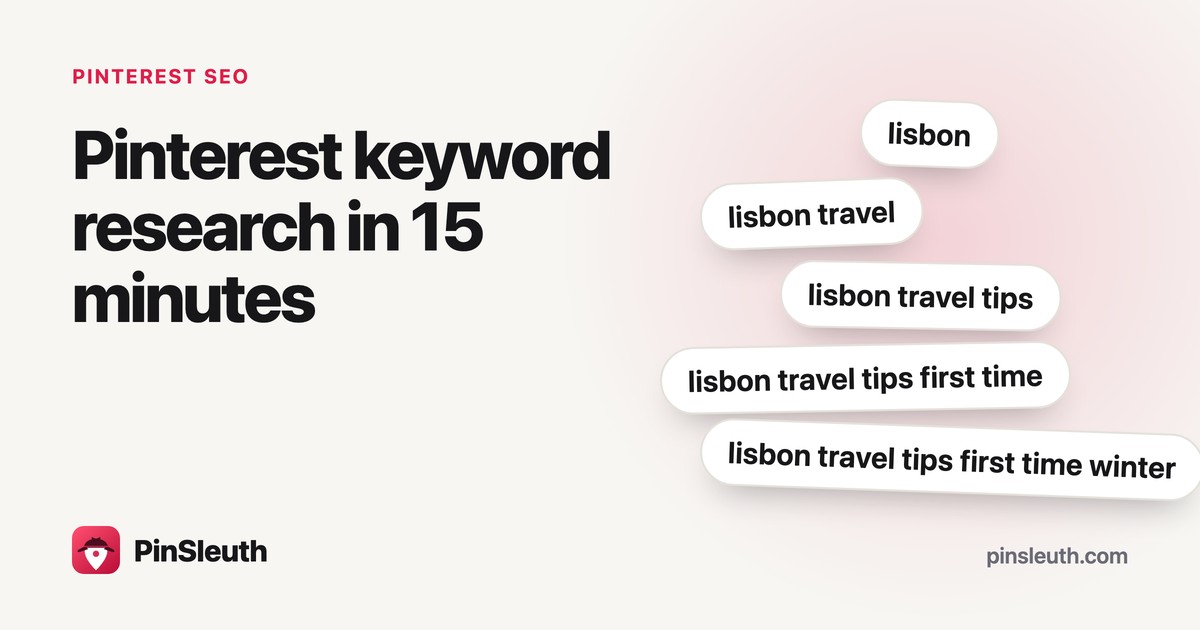
Keyword research for Pinterest is not the same job as keyword research for Google. People use Pinterest to plan and to browse, so the searches are shorter, more visual and more seasonal. The good news is that Pinterest tells you a lot for free. Here is a way to get from a blank page to a short, useful keyword list in about fifteen minutes.
Minute 0 to 5: grow one seed into a list
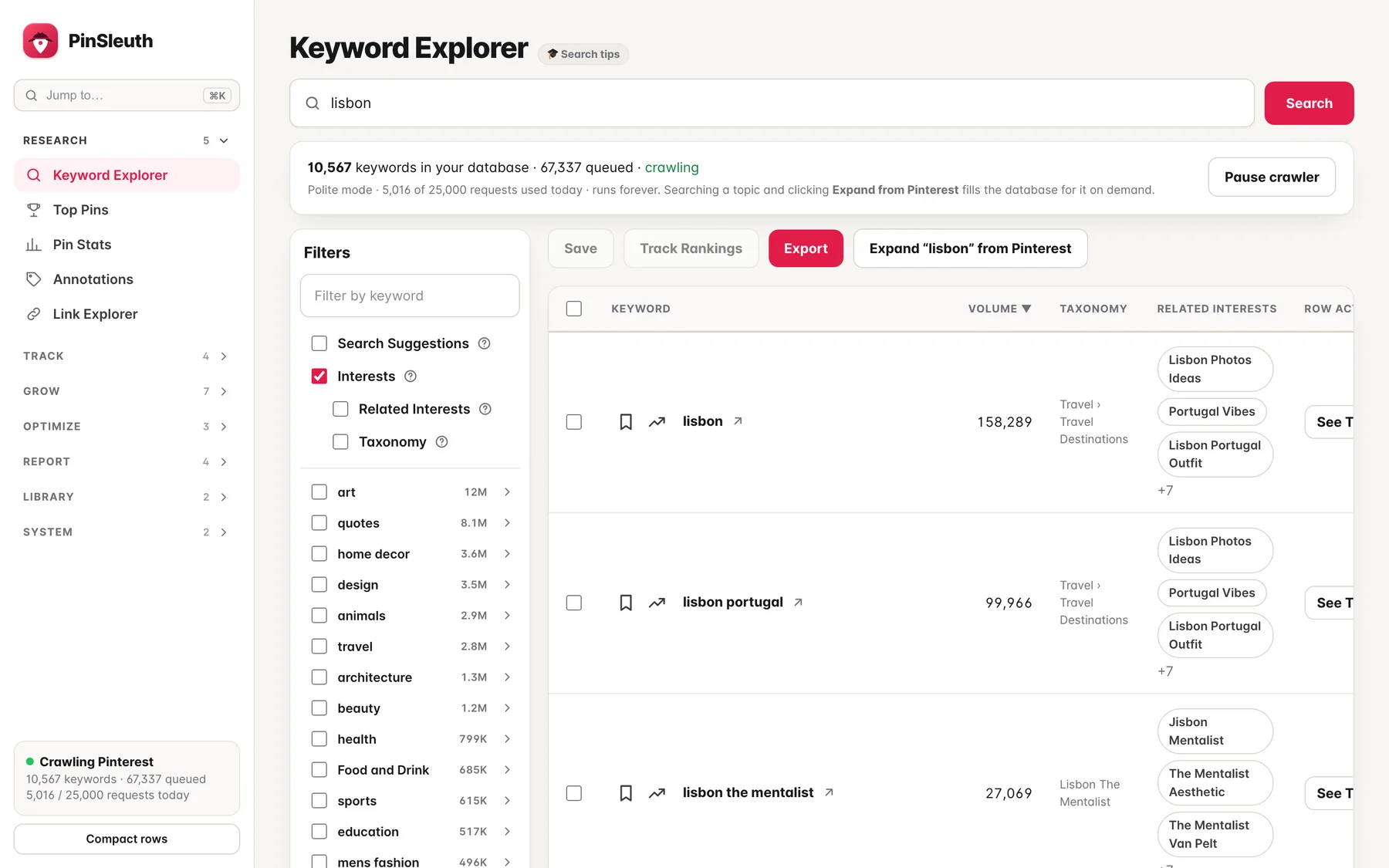
Pick a seed that describes the topic of one post, such as “lisbon travel”. Type it into Pinterest’s search box and note every suggestion that appears. Then add a space and a letter and look again. Each suggestion is a phrase real people have typed, which is why it beats guessing.
A tool can do this faster, and the keyword explorer does it with one click, but the idea is the same: start with one seed and let Pinterest finish the sentence.
Minute 5 to 10: sort by what you can actually win
A big number is not automatically a good target. For each phrase, ask three questions:
- Does it fit the post? A keyword you cannot honestly answer will not hold a pin.
- Is there demand? Volume is an estimate, so treat it as a rough size: small, medium or large.
- Is it crowded? Look at the first page of results. If every pin comes from a huge brand, a smaller, more specific phrase is a better first target.
Longer phrases such as “lisbon travel tips first time” usually have less demand and less competition, so they are often where a smaller blog can get a foothold.
Minute 10 to 15: read what ranks
Open the top pins for your chosen phrase and read their titles and descriptions. Notice the angle they take and the words they repeat naturally. Look at the annotations, the keywords Pinterest attaches to each pin, which we explain in this post. They show how Pinterest understands the topic, which helps you choose supporting ideas that really belong in your pin.
Then write it down
- One main keyword per pin.
- Two or three supporting ideas that are truly part of the post.
- The pin’s angle in one sentence, so the description writes itself.
When you write the title and description, say the keyword once and describe the pin in plain sentences. Our guide to writing without stuffing covers that step.
Volumes are estimates and change through the year. Use them to compare ideas, not as exact counts.
Quick questions
How many keywords should one pin target?
One main keyword. Pinterest builds its own list of related keywords for the pin, so you do not need to pack in more. Use one or two supporting ideas only where they are true of the post.
Should I pick the biggest keyword?
Not automatically. A very big phrase is usually crowded. A more specific phrase with fewer pins is often easier to rank for, and it attracts people who want exactly what the post offers.
How often should I redo keyword research?
For each new post, and once a year for your best old posts. Seasonal topics change with the calendar, and new phrases appear all the time.