PinSleuth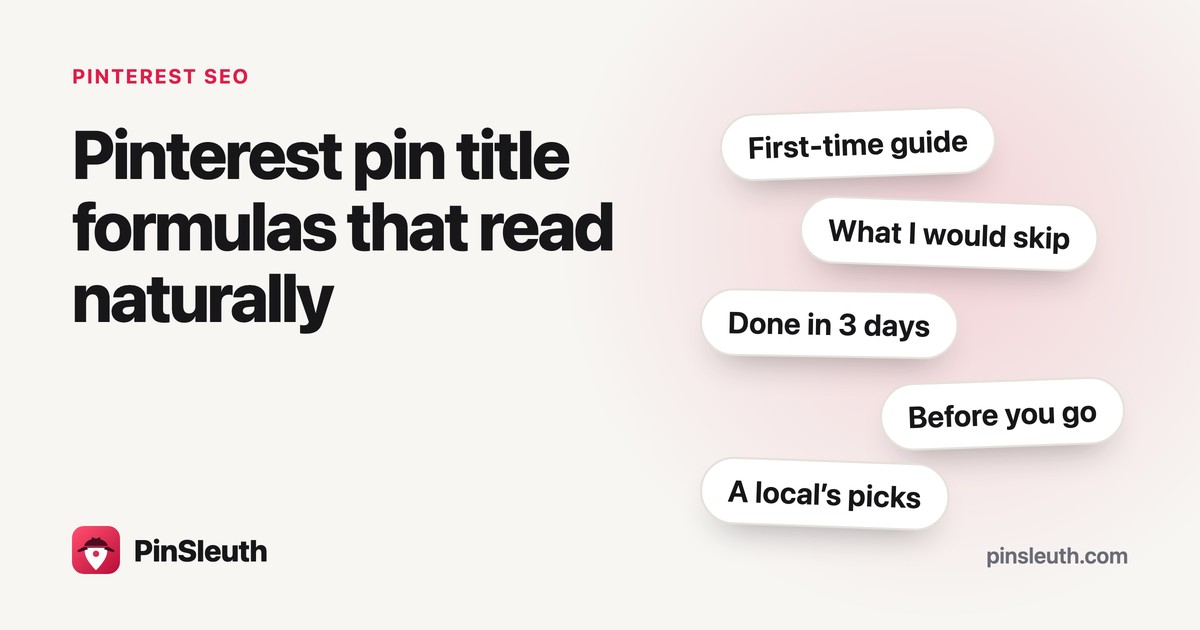
A good pin title does two jobs. It tells Pinterest what the pin is about, and it tells a person why to tap. Plenty of titles manage the first and fail the second, ending up as a pile of search terms. Here are six simple shapes that do both without sounding like a robot.
Key takeaways
- Say what the pin is, in words a person would use, and lead with them.
- One idea per title. Promise something the page delivers.
- A number, a question or a clear result gives people a reason to tap.
- Only the first part of a title shows in the feed, so put the important words first.
What a title has to do
Titles can run up to 100 characters, but only the first part shows in the feed. So the opening words carry the most weight: they should say what the pin is. The rest can add detail for people who open the pin.
Six shapes that read naturally
- The guideName the topic and promise help: “Lisbon in October: a simple guide”.
- The listA number sets expectations: “9 things to do in Lisbon when it rains”.
- The questionA question your reader already has: “Is Lisbon worth three days?”.
- The how-toA clear job to be done: “How to ride Tram 28 without the crowds”.
- The mistakeWhat to avoid saves people trouble: “What I would skip in Lisbon”.
- The resultShow where they end up: “A relaxed Lisbon weekend, hour by hour”.
Three habits to keep
- Lead with the words a person would type.
- Say it once. A title that repeats itself reads as spam.
- Make a promise the page keeps, and nothing bigger.
Lisbon Travel | Lisbon Guide | Lisbon Tips | Lisbon Itinerary
Lisbon tips for a first-time visitor, from someone who lives here
Starter titles to adapt
If you are staring at a blank page, start from one of these and swap in your own topic. Keep the ones that sound like you.
| Shape | Template | Example |
|---|---|---|
| Guide | [Topic]: a simple guide | Sintra: a simple guide for a first visit |
| List | [Number] [things] for [situation] | 7 viewpoints in Lisbon that are free |
| Question | Is [topic] worth [cost or time]? | Is the Lisbon Card worth it? |
| How-to | How to [do the thing] without [pain] | How to get to Belém without the queue |
| Mistake | What I would [skip or do differently] | What I would skip on a second trip to Lisbon |
| Result | [A good outcome], [how] | A slow Sunday in Alfama, hour by hour |
What to avoid
Three things that backfire
ALL CAPS and lots of symbols look like noise. Clickbait the page does not deliver brings people who leave at once. And a title that is just a keyword list says nothing to a person.
- Titles that need a second read to understand.
- Promising “the best” of everything with nothing to show for it.
- Titles that do not match the page they link to. See our post on matching a pin to its page.
Try it on your own pins
Take your three best posts. Write two titles for each, using two different shapes. Make the pins, publish them a few days apart, and see which earns more clicks over a few weeks. Over time you will learn which shapes your readers like.
Quick questions
Should the keyword be at the start?
Near the start is good if it reads naturally. A natural title beats a perfectly placed keyword.
Do numbers really help?
Often they do, because they set a clear expectation. Only use a number if it is true of the post.
Can I use emoji in titles?
You can, but they take space and add little. Words do more of the work.
How long should a title be?
As short as it can be while saying what the pin is. Long titles are allowed, but the first part is what most people see.